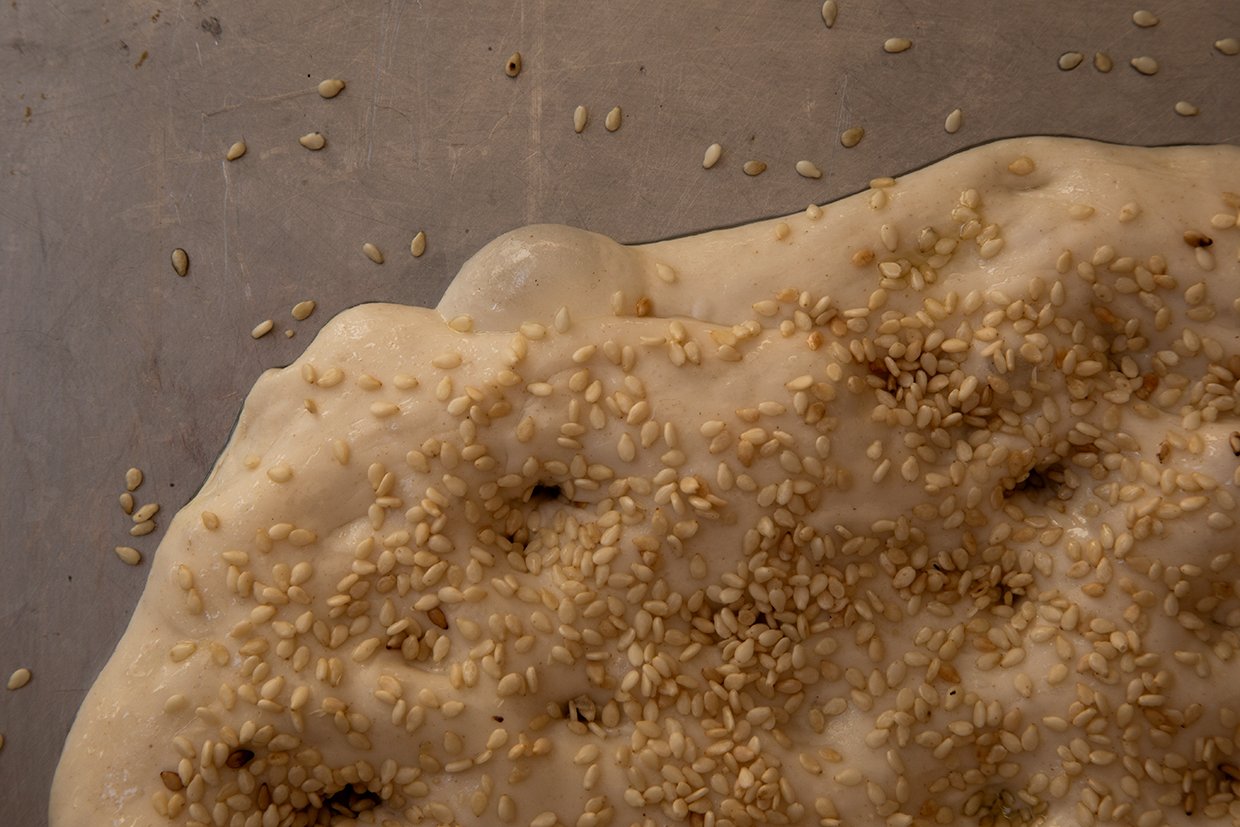
LAGANA FLATBREAD
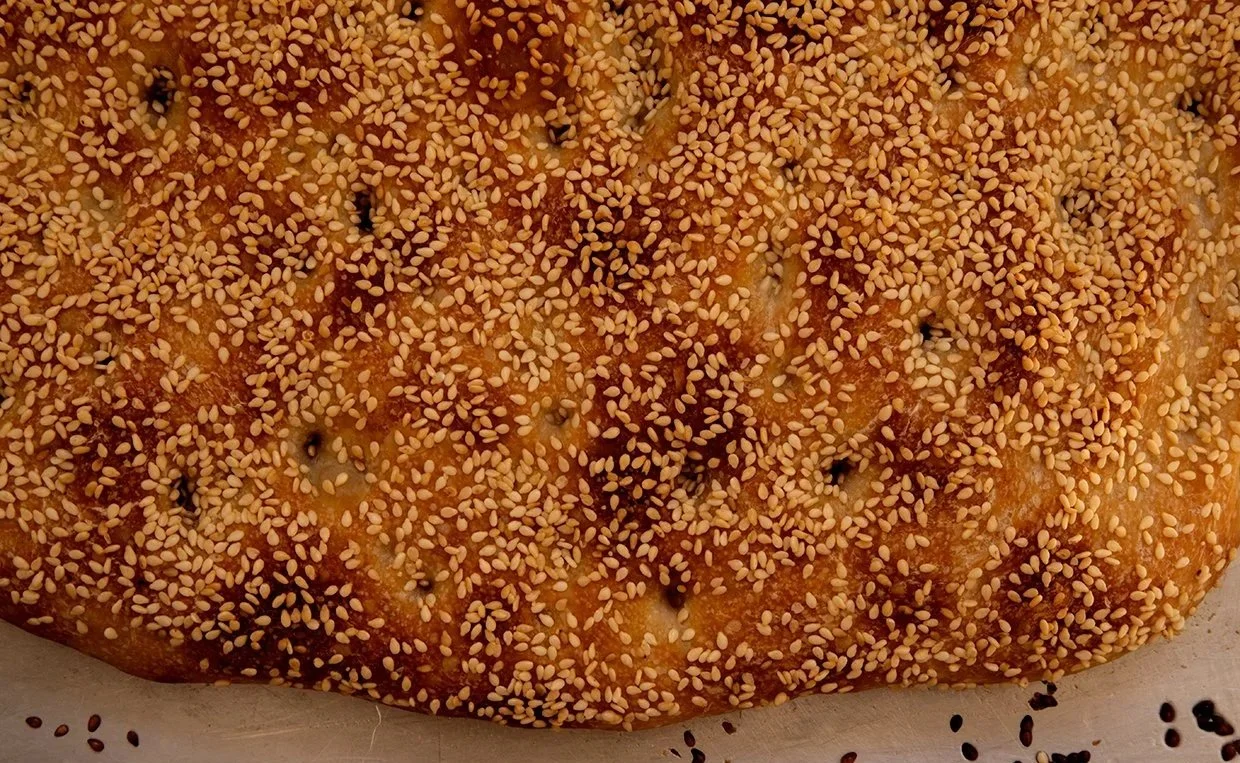
An ancestral ritual bread offering. A symbol of wellbeing, abundance, prosperity and fertility.
Nowadays, ‘lagana’ bread is made on ‘Clean Monday’ marking the celebration of the beginning of Lent according to the Greek Orthodox Tradition.
’Lagana’ was traditionally an unleavened flatbread symbolising the shift towards simplicity and humility in every day life. In the modern versions of this bread, baker’s yeast or wild sourdough starter is added just like the one in this recipe to enhance the bread flavour from the fermentation and to add the nutritional benefits from the wild fermentation in the final baked bread.
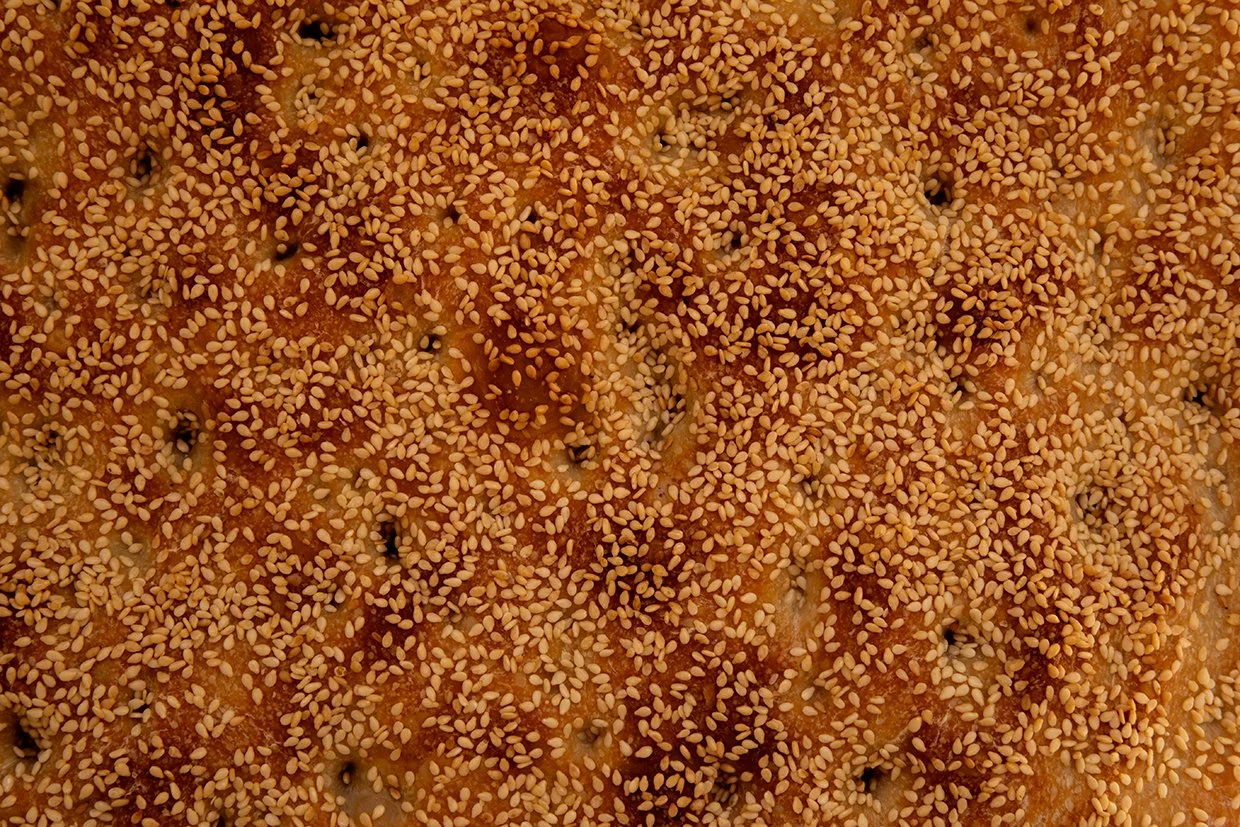
Her shape is usually oval and it is decorated with impressing fingertips and covered with an abundant quantity of sesame seeds. Sesame seeds symbolise immortality, longevity, prosperity and new beginnings. They are also used in purification rituals related to karma or energetic cleansing.
Through the physiological lens, sesame seeds are being added to this bread to boost immunity and offer deep nourishment before the start of the Lent season of the Christian Orthodox Tradition.
‘Lagana’ resembles a very crispy baked thin focaccia bread.
Traditionally ‘Lagana’ bread is being shared within the community and broken by hand. The act of breaking this flatbread by hand symbolises community and unity.
Here is the recipe to make your own and enjoy it within your community.
LAGANA FLATBREAD
INGREDIENTS (makes one large oval flatbread of approximately 40 cm in length feeding 4 - 6 people).
490 g white strong bread flour or Manitoba flour
320 g activated sourdough starter or 8 g dry baker’s yeast
280 g lukewarm filtered water
2 pinches of sugar or a few drops of local honey
9 g sea salt, finely crushed
Good quality extra virgin olive oil
An abundant quantity of white sesame seeds
EQUIPMENT
+ A large mixing bowl
+ A food safe container with lid large enough to fit the dough
+ Baking tray
+ Good working oven
PREPARATION
Mix the flour with the lukewarm filtered water, activated sourdough and honey or sugar solution.
Let the mix rest for at least 20 minutes.
Then add the finely crushed sea salt and knead the dough ultimately by stretching and folding it to herself following a clockwise rotation as this dough is very hydrated, soft and delicate.
Let the dough rest for at least 30 minutes.
Continue the stretch and foldings followed by a resting time of 30 minutes for another 3 times.
After this time, transfer the dough in the food container you have previously smeared with a very thin layer of olive oil to prevent the dough from sticking. Transfer the dough in the container and cover it with a lid, or a beeswax food sheet, or 2 to 3 clean kitchen towels. The aim is to seal the humidity within the dough and prevent her from drying out by the air circulation in the fridge.
Transfer the covered dough in the fridge for an overnight cold fermentation rest of 8 to 12 hours.
You could also experiment with longer cold fermentation times up to 32 or 48 hours for a richer fermentation flavour profile of the dough.
After that resting time, remove the dough from the refrigerator and let her rest at room temperature for at least one hour to two hours.
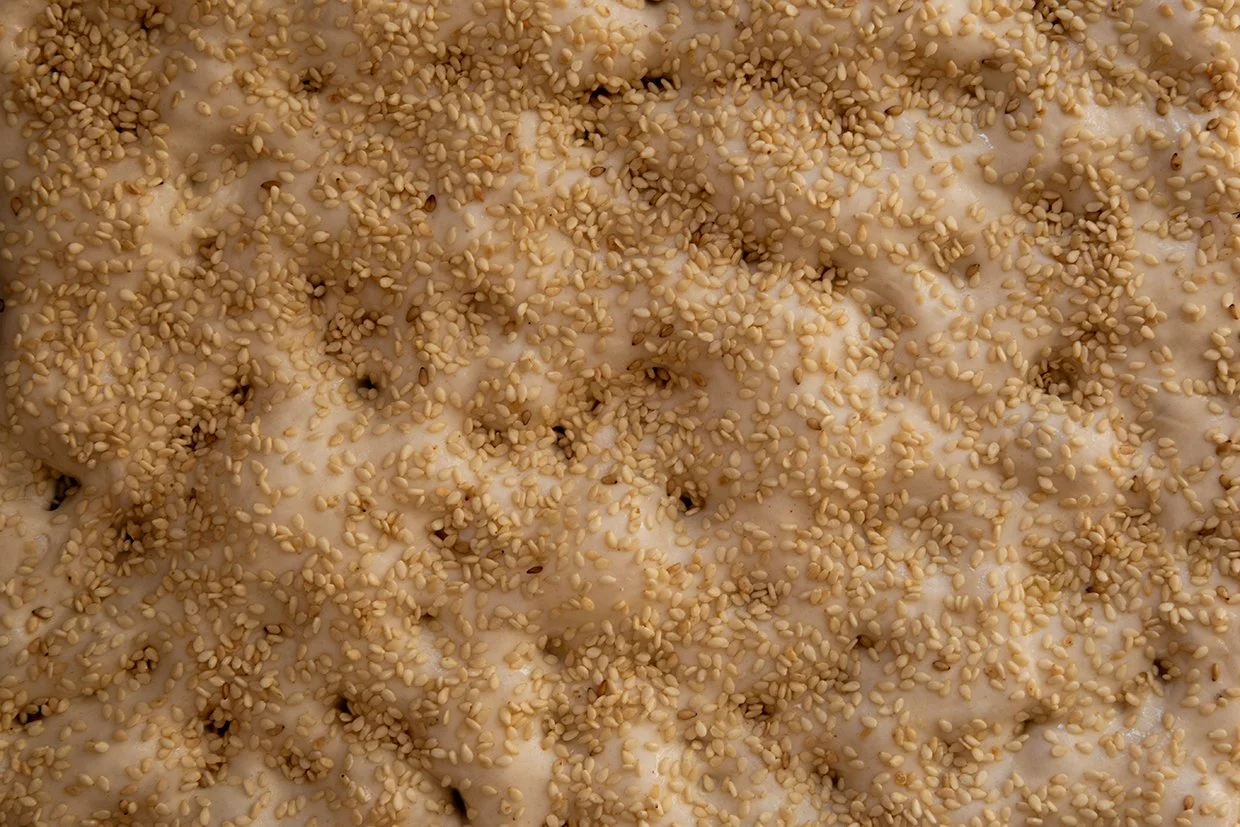
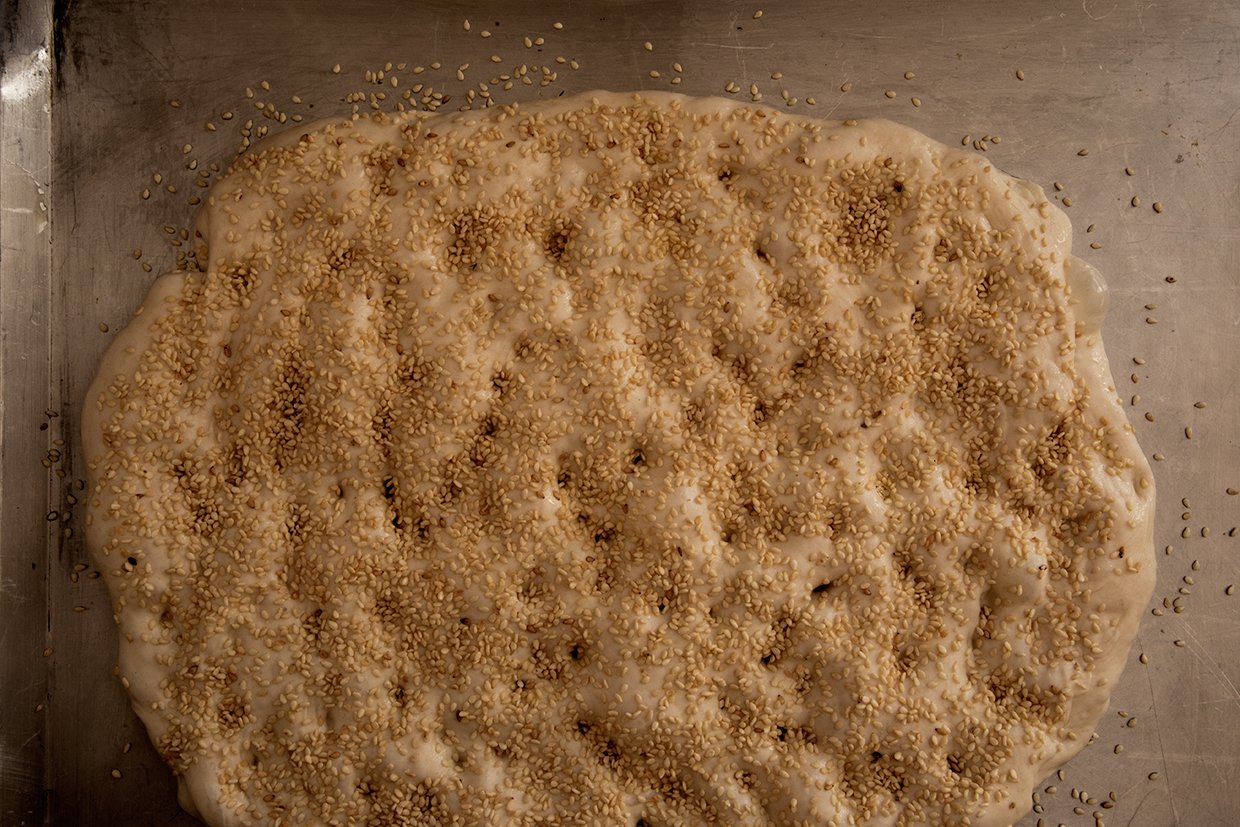
Transfer the dough on the baking tray you have previously smeared with some olive oil and stretch the dough gently to create an oval dough sheet. You could use your fingers to gently poke with dough and stretch it away from you to open it to a flat sheet. Gently poke the oval bread further to create beautiful deep finger indents.
Sprinkle the surface of the flatbread with an abundant quantity of sesame seeds while infusing the bread with your wishes and prayers for the time ahead. Alternatively you could sprinkle with some honey water or sugar water before you sprinkle the dough with the sesame seeds.
Bake the ‘lagana’ bread in preheated oven at 220°C (conventional heating) for 20-25 (for a light bake) to 30 minutes for a crispy bake and a golden brown exterior.
Enjoy it warm together with your community passing blessing to each other for love, abundance and prosperity for the time ahead.
SERVING TIPS:
+ dipped into traditional ‘tarama’ cream paste made of fish roe or homemade hummus or paired with some extra virgin local olive oil.
Much love,
Alexandra